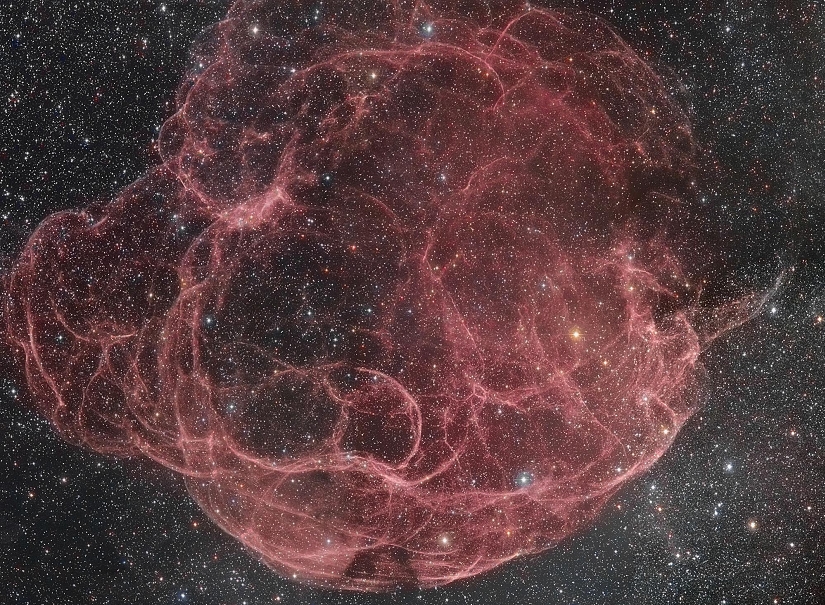
Friday, February 18, 2011
APOD 3.5

Friday, February 11, 2011
APOD 3.4

Friday, February 4, 2011
APOD 3.3
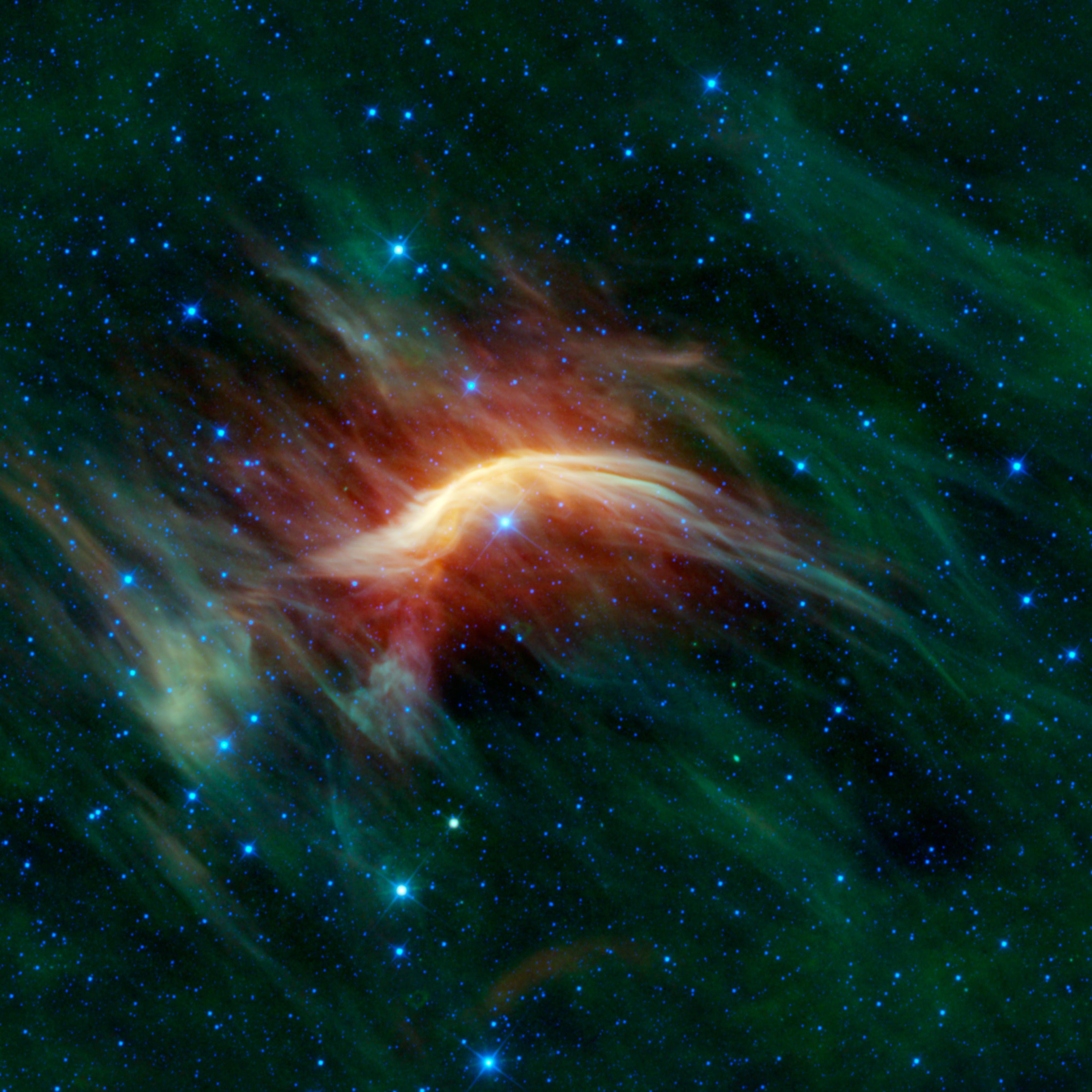
Friday, January 28, 2011
APOD 3.2
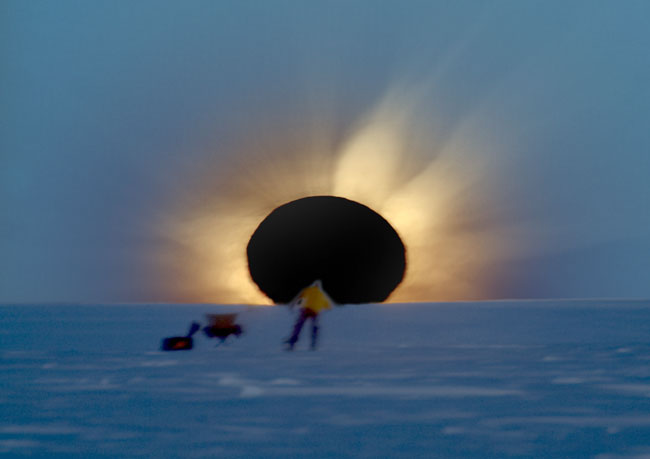
This image was taken in Antarctica in 2003. Two photographers traveled to the bottom of the world to see the complete solar eclipse. The image is a composite image to recreate what the human eye would have seen. The corona extends out beyond the shadow of the moon. To the right of the other photographer is an equipment bad and a collapsible chair. Some people really like eclipses.
Friday, January 21, 2011
APOD 3.1
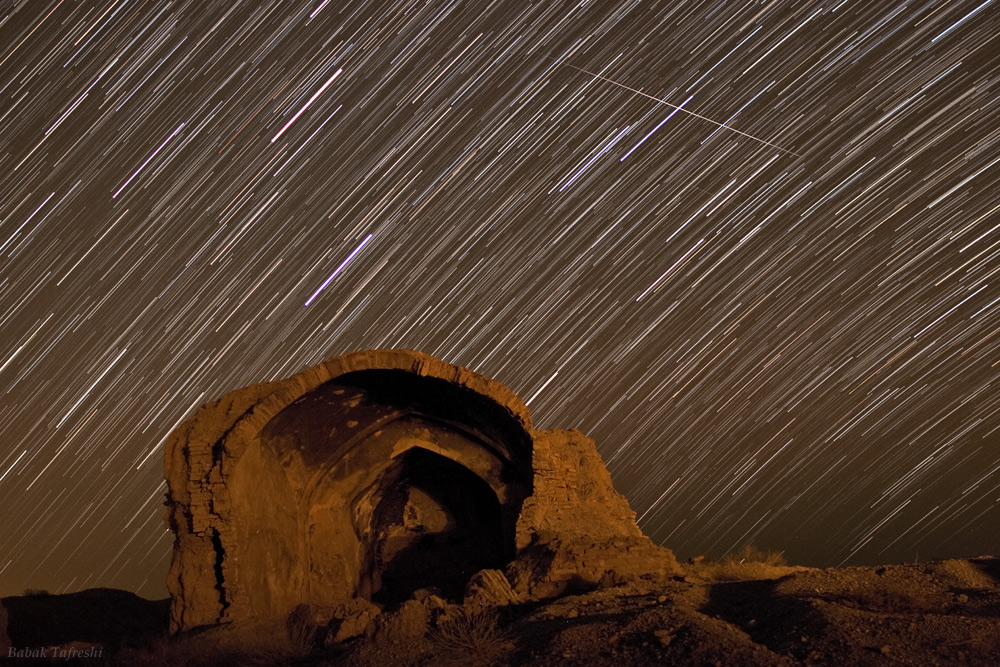
Wednesday, January 12, 2011
Sol
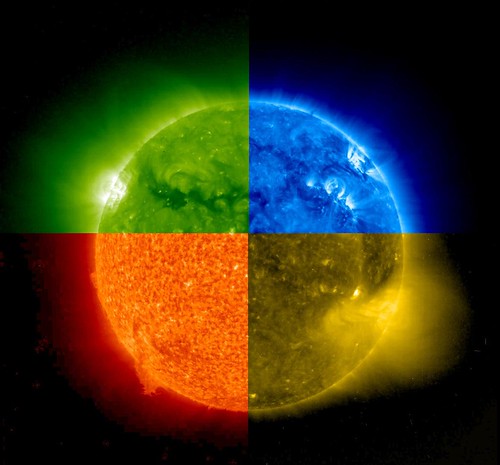 |
| This image of the Sun is composed of four different layers of ultraviolet light. |
 |
| This is a picture of God holding the Sun shortly after it's creation. Circa 5,000,000,000 BC. |
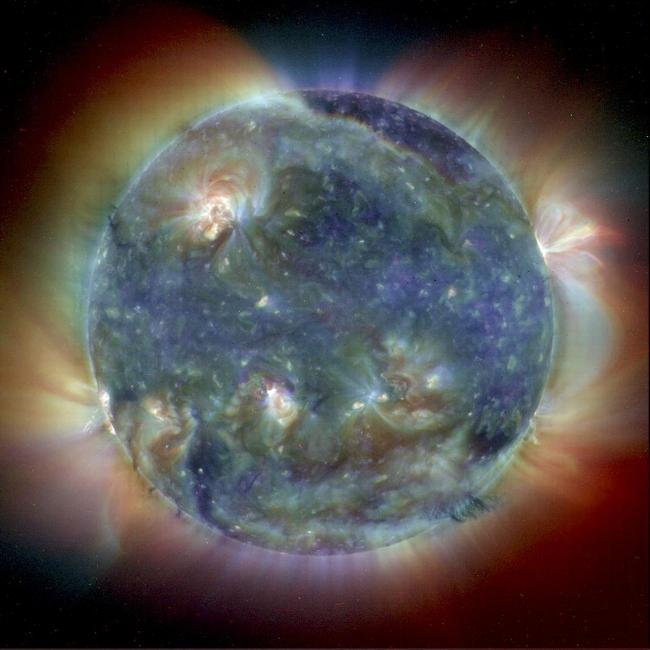 |
| This picture is a composite image taken at ultraviolet wavelengths from 171-284 Ångstroms |
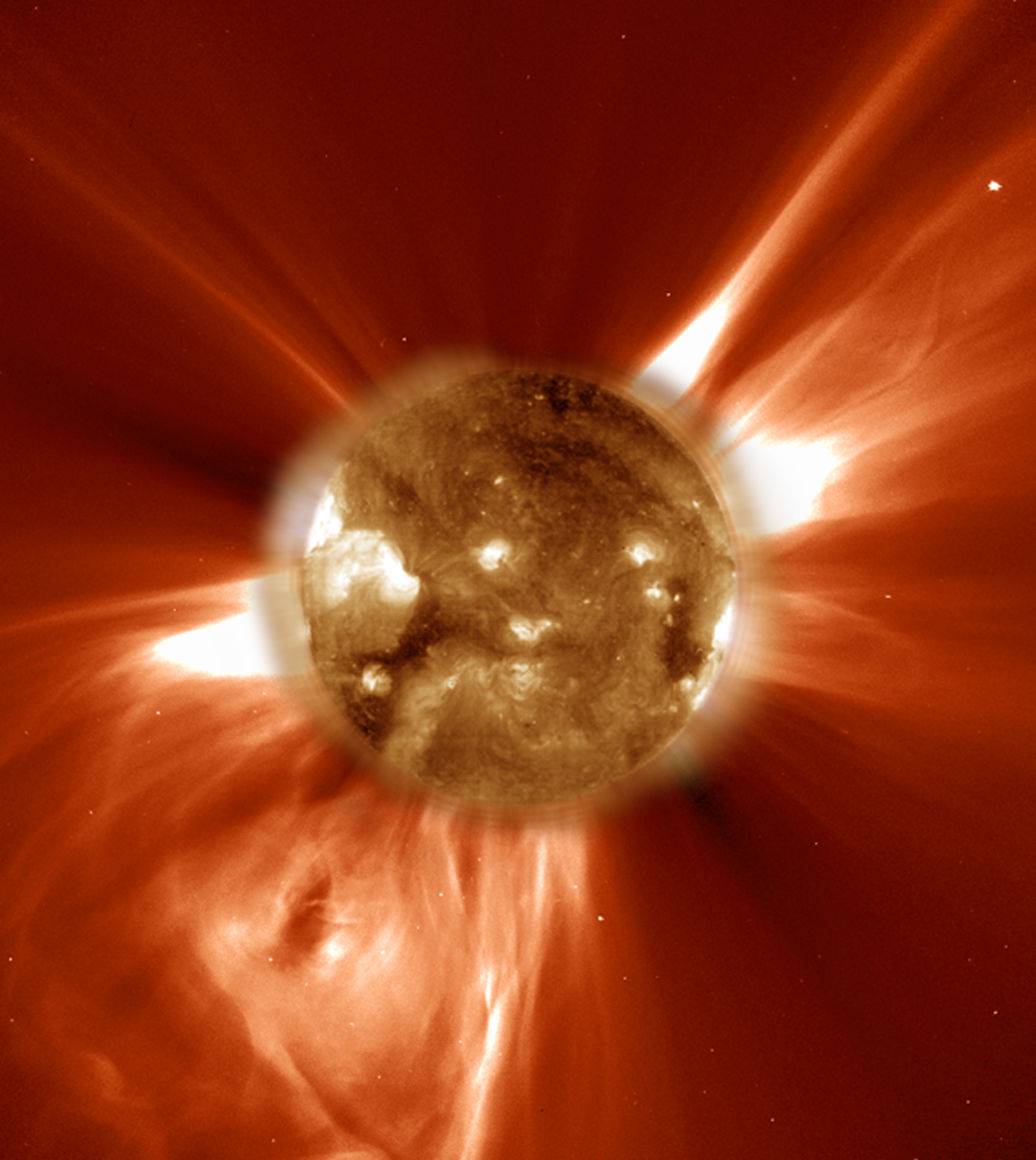 |
| This is a picture of a coronal mass ejection taken in the x-ray wavelength. |
 |
| Another image of the Sun taken in the x-ray spectrum. |
 |
| This gif shows a coronal mass ejection with the sun blocked out (represented by the smaller circle). |
Observation (December-January)
I've been observing every night, weather allowing, and I've come to love the winter sky. I think that the Winter Hexagon (Sirius, Betelgeuse, Procyon, Castor, Pollux, Capella, and Aldebaran) is the coolest part of the sky, and I look at it all the time. The fall sky is kind of boring, but Pegasus and Aries are cool. Cassiopeia and Perseus are cool, but where I moved to is too bright at night to see Cepheus or Camelopardalis. Anyway, stars are cool, so tune in next time for more observations! :D
Subscribe to:
Posts (Atom)